Table of Contents
As mental health professionals, staying up-to-date with the latest research is crucial for providing evidence-based care to our clients. One fundamental aspect of understanding and interpreting research is grasping the concepts of dependent and independent variables. This guide will help you master these essential elements of research methods, improving your ability to apply scientific findings to your therapy practice.
Understanding Variables in Research
Before diving into specific examples, let's establish a clear understanding of what variables are in the context of research.
What is a Variable?
In research, a variable is any characteristic, attribute, or factor that can be measured and can vary among different subjects or in different situations. Variables are the building blocks of scientific investigations, allowing researchers to study relationships, causality, and patterns in human behavior and mental processes.
Types of Variables: Independent and Dependent
Two primary types of variables are central to most research studies:
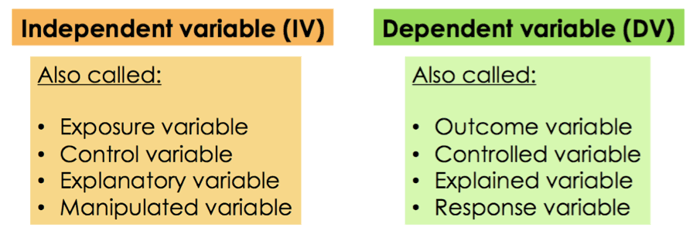
- Independent Variables (IV): These are the factors that researchers manipulate or control in an experiment. They are the presumed cause or influencer of the outcome being studied.
- Dependent Variables (DV): These are the outcomes or effects that researchers measure in response to changes in the independent variables. They are the presumed effect or result.
Dependent and Independent Variables Examples in Mental Health Research
Let's explore some specific examples of dependent and independent variables in the context of mental health research. Understanding these examples will help you better interpret studies and apply their findings to your clinical practice.
Example 1: Cognitive Behavioral Therapy (CBT) for Depression
- Independent Variable: Type of therapy (CBT vs. traditional talk therapy)
- Dependent Variable: Depression symptoms (measured by a standardized scale)
In this study, researchers might compare the effectiveness of CBT to traditional talk therapy in reducing depression symptoms. The type of therapy (IV) is manipulated by the researchers, while the change in depression symptoms (DV) is measured to determine the therapy's impact.
Example 2: Mindfulness Meditation and Anxiety
- Independent Variable: Duration of daily mindfulness practice (e.g., 5 minutes vs. 15 minutes vs. 30 minutes)
- Dependent Variable: Anxiety levels (measured by self-report and physiological markers)
This study could investigate how different durations of mindfulness practice (IV) affect anxiety levels (DV) in participants. The researchers would assign participants to different groups practicing for various lengths of time and measure the resulting changes in anxiety.
Example 3: Social Support and PTSD Symptoms
- Independent Variable: Level of perceived social support (low, medium, high)
- Dependent Variable: Severity of PTSD symptoms
Researchers might examine how different levels of perceived social support (IV) influence the severity of PTSD symptoms (DV) in trauma survivors. They would measure participants' perceived social support and correlate it with their PTSD symptom severity.
Example 4: Medication Dosage and OCD Symptoms
- Independent Variable: Dosage of a specific SSRI medication
- Dependent Variable: Frequency and intensity of OCD symptoms
In this pharmaceutical study, researchers would manipulate the dosage of an SSRI medication (IV) and measure its effects on OCD symptoms (DV) to determine the most effective dosage for symptom reduction.
The Importance of Understanding Variables in Therapy Practice
Grasping the concepts of dependent and independent variables is crucial for several reasons:
- Critical Evaluation of Research: Understanding variables helps you critically evaluate research studies, allowing you to assess the validity and reliability of findings before applying them to your practice.
- Evidence-Based Practice: By comprehending the relationship between variables, you can more effectively implement evidence-based interventions tailored to your clients' needs.
- Treatment Planning: Recognizing potential independent variables in your clients' lives can help you develop more comprehensive treatment plans that address multiple factors influencing their mental health.
- Outcome Measurement: Understanding dependent variables allows you to select appropriate outcome measures to track your clients' progress and adjust treatment as needed.
- Contribution to Research: If you choose to participate in or conduct research, a solid understanding of variables is essential for designing and implementing effective studies.
Case Study: Applying Variable Knowledge in Practice
Dr. Sarah Thompson, a licensed clinical psychologist, recently read a study on the effects of exercise on depression symptoms. The study used the following variables:
- Independent Variable: Exercise frequency (0, 2, or 4 times per week)
- Dependent Variable: Depression symptoms (measured by the Beck Depression Inventory)
The study found that participants who exercised four times per week showed the most significant reduction in depression symptoms.
Dr. Thompson decided to apply this knowledge to her practice. She began recommending regular exercise to her clients with depression, tracking their symptoms using the Beck Depression Inventory. By understanding the variables involved, she could:
- Clearly explain the potential benefits of exercise to her clients
- Help clients set achievable exercise goals based on the study's findings
- Monitor changes in depression symptoms as a function of exercise frequency
- Adjust recommendations based on individual client responses
Over time, Dr. Thompson noticed that many of her clients who adopted regular exercise routines reported improvements in mood and overall well-being. This real-world application of research findings, made possible by her understanding of variables, allowed her to enhance her evidence-based practice and improve client outcomes.
Enhancing Your Research Literacy with Continuing Education
As the field of mental health continues to evolve, staying current with research methodologies and findings is essential for providing the best possible care to your clients. Therapy Trainings™ offers a wide range of continuing education courses designed to enhance your research literacy and evidence-based practice skills.
Our courses, available at therapytrainings.com, are approved by licensing boards across the nation, ensuring that you can fulfill your CE requirements while gaining valuable knowledge. From understanding research methods to applying the latest findings in your practice, our expert-led courses provide the tools you need to excel in your field.
Take the next step in your professional development and explore our course offerings today. With Therapy Trainings™, you'll be well-equipped to interpret and apply research findings, ultimately improving your ability to help your clients achieve better mental health outcomes.
Conclusion
Understanding dependent and independent variables is a fundamental skill for mental health professionals seeking to provide evidence-based care. Mastering these concepts will allow you to evaluate research more effectively, implement findings in your practice, and contribute to the growing body of knowledge in our field.
Understanding the distinction between dependent and independent variables in research is crucial for you to accurately interpret studies and apply findings in practice, and to complement this knowledge, you might want to learn about Maslow's Hierarchy of Needs, which provides a practical framework for addressing clients' fundamental motivations in therapy. Moreover, you might want to explore the use of therapy apps for data-driven assessment, and progress tracking can provide valuable tools to monitor and support client progress.
As you continue to develop your research literacy skills, remember that Therapy Trainings™ is here to support your professional growth. Visit therapytrainings.com to discover CE courses that will deepen your understanding of research methods and their application in therapy practice.
Empower yourself with knowledge, enhance your clinical skills, and make a greater impact on your clients' lives through evidence-based practice. The journey to mastering research methods starts here!
References
- Kazdin, A. E. (2017). Research design in clinical psychology (5th ed.). Boston, MA: Pearson.
- American Psychological Association. (2020). Publication manual of the American Psychological Association (7th ed.). Washington, DC: Author.
- Creswell, J. W., & Creswell, J. D. (2018). Research design: Qualitative, quantitative, and mixed methods approaches (5th ed.). Thousand Oaks, CA: SAGE Publications.
- Melnyk, B. M., & Fineout-Overholt, E. (2019). Evidence-based practice in nursing & healthcare: A guide to best practice (4th ed.). Philadelphia, PA: Wolters Kluwer.
- Petticrew, M., & Roberts, H. (2006). Systematic reviews in the social sciences: A practical guide. Malden, MA: Blackwell Publishing.