Table of Contents
Explore Maslow's theory and its practical applications in therapy sessions. Discover how understanding this hierarchy can improve client assessment and treatment planning.
Introduction
As mental health professionals, we're constantly seeking ways to better understand and support our clients. One of the most influential theories in psychology that continues to shape our approach to therapy is Maslow's Hierarchy of Needs. This comprehensive guide will dive deep into Abraham Maslow's groundbreaking theory and explore its practical applications in therapy sessions.
By the end of this article, you'll have a thorough understanding of how to use Maslow's Hierarchy of Needs to enhance your client assessments, improve treatment planning, and ultimately achieve better outcomes in your therapy practice.
Understanding Maslow's Hierarchy of Needs
The Origins of the Theory
Abraham Maslow, an American psychologist, introduced his theory of human motivation in 1943. His paper, "A Theory of Human Motivation," proposed that people are motivated by five basic categories of needs: physiological, safety, love and belonging, esteem, and self-actualization.
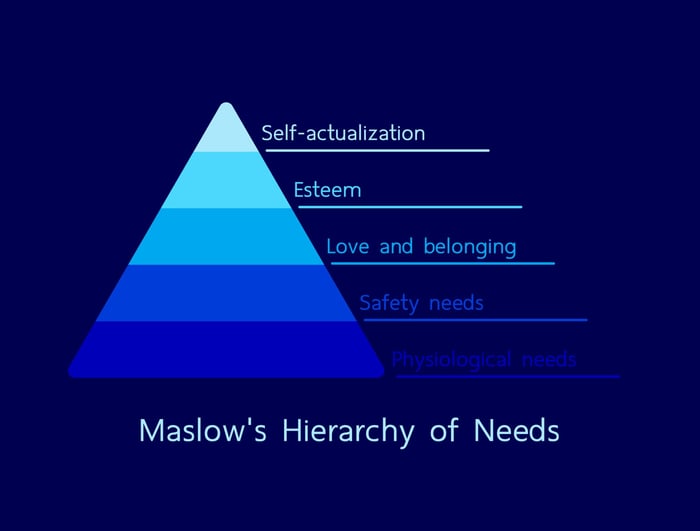
Maslow's theory suggests that these needs are hierarchical, meaning that lower-level needs must be satisfied before individuals can focus on higher-level needs. This concept is often represented as a pyramid, with the most fundamental needs at the base and the need for self-actualization at the apex.
The Five Levels of Maslow's Hierarchy
- Physiological Needs: These are the most basic human needs essential for survival, including food, water, sleep, and shelter.
- Safety Needs: Once physiological needs are met, people seek safety and security in their environment, including personal security, financial security, and health and wellbeing.
- Love and Belonging: This level involves the need for interpersonal relationships, including friendships, intimate relationships, and family connections.
- Esteem: At this level, individuals seek recognition, respect, and self-esteem. This includes both self-respect and the esteem of others.
- Self-Actualization: The highest level of the hierarchy represents the need for personal growth and fulfillment. It's about reaching one's full potential and becoming the best version of oneself.
Later Additions to the Theory
In later years, Maslow expanded his model to include three additional needs:
- Cognitive Needs: The desire to know, understand, and explore.
- Aesthetic Needs: The appreciation and search for beauty, balance, and form.
- Transcendence: The need to help others achieve self-actualization.
These additions provide a more nuanced understanding of human motivation and can be particularly relevant in therapeutic settings. For a detailed exploration of these later additions and their implications, you can refer to the American Psychological Association's overview of Maslow's expanded hierarchy.
Practical Applications of Maslow's Hierarchy in Therapy
Understanding Maslow's Hierarchy of Needs can significantly enhance your therapeutic approach. Here's how you can apply this theory in your practice:
1. Client Assessment
When conducting initial assessments, use Maslow's Hierarchy as a framework to understand your client's current state:
- Are their basic physiological and safety needs being met?
- Do they have a support system that fulfills their need for love and belonging?
- Are they struggling with self-esteem issues?
- Do they have opportunities for self-actualization in their life?
By identifying which needs are not being met, you can better understand the root causes of your client's issues and prioritize treatment goals.
2. Treatment Planning
Once you've assessed your client's needs, you can create a treatment plan that addresses deficits at each level of the hierarchy:
- For clients struggling with basic needs, connect them with community resources for food, shelter, or financial assistance.
- Address safety concerns by developing coping strategies for anxiety or helping clients leave abusive situations.
- For those lacking social connections, focus on building social skills or addressing attachment issues.
- Work on self-esteem through cognitive-behavioral techniques or by helping clients identify and leverage their strengths.
- Support self-actualization by exploring clients' values, goals, and potential.
3. Goal Setting
Use Maslow's Hierarchy to help clients set realistic and meaningful goals:
- Encourage clients to address lower-level needs before tackling higher-level aspirations.
- Help clients recognize the connection between meeting basic needs and achieving higher-level goals.
- Use the hierarchy to illustrate progress and motivate clients to continue their personal growth journey.
4. Understanding Relapse
Maslow's theory can provide insight into why clients might relapse or struggle to make progress:
- A client focused on self-actualization might regress if a lower-level need suddenly becomes threatened (e.g., job loss affecting safety needs).
- Recognize that progress isn't always linear and that clients may need to revisit lower-level needs periodically.
5. Enhancing Empathy and Rapport
By viewing your clients through the lens of Maslow's Hierarchy, you can:
- Develop a more holistic understanding of their experiences and challenges.
- Validate their struggles at all levels of the hierarchy.
- Build stronger therapeutic alliances by demonstrating a deep understanding of their needs.
Case Study: Applying Maslow's Hierarchy in Therapy
Let's consider a hypothetical case to illustrate how Maslow's Hierarchy can be applied in a therapeutic setting:
Sarah, a 35-year-old woman, seeks therapy for depression and anxiety. During the initial assessment, you use Maslow's Hierarchy to guide your questioning:
- Physiological Needs: You learn that Sarah has been experiencing insomnia and poor appetite.
- Safety Needs: Sarah reveals she's in an emotionally abusive relationship and fears for her financial security.
- Love and Belonging: She feels isolated and has few close relationships outside of her partner.
- Esteem: Sarah struggles with low self-esteem and feels she's underperforming at work.
- Self-Actualization: She expresses a desire to pursue her passion for art but feels stuck in her current situation.
Based on this assessment, you develop a treatment plan that addresses Sarah's needs at multiple levels:
- Implement sleep hygiene techniques and discuss nutrition to address physiological needs.
- Develop a safety plan and explore options for leaving the abusive relationship.
- Encourage Sarah to reconnect with old friends and explore new social opportunities.
- Use cognitive-behavioral techniques to address negative self-talk and build self-esteem.
- Incorporate art therapy to help Sarah reconnect with her passion and work towards self-actualization.
By addressing Sarah's needs at each level of the hierarchy, you create a comprehensive treatment plan that supports her overall well-being and personal growth.
The Importance of Continuing Education in Maslow's Theory
As mental health professionals, it's crucial to stay updated on the latest research and applications of theories like Maslow's Hierarchy of Needs. Continuing education courses can provide valuable insights and practical techniques for incorporating this theory into your practice.
At Therapy Trainings™, we offer a wide range of CE courses approved by boards across the nation. Our courses delve deep into foundational theories like Maslow's Hierarchy and provide practical strategies for applying these concepts in your therapy sessions.
By investing in your professional development through our CE courses, you'll not only enhance your understanding of Maslow's theory but also gain new tools to improve client outcomes and grow your practice.
Conclusion
Maslow's Hierarchy of Needs remains a cornerstone theory in psychology and therapy. By understanding and applying this framework in your practice, you can:
- Conduct more comprehensive client assessments
- Develop targeted and effective treatment plans
- Set meaningful goals with your clients
- Enhance your empathy and rapport-building skills
Remember, the journey to self-actualization is ongoing, both for our clients and ourselves as therapists. Continuing education is key to staying at the forefront of our field and providing the best possible care for our clients.
To explore our range of CE courses and take your therapy practice to the next level, visit therapytrainings.com. Invest in your professional growth today and empower yourself to make an even greater impact on your clients' lives.
References
- Maslow, A. H. (1943). A theory of human motivation. Psychological Review, 50(4), 370-396. https://psycnet.apa.org/record/1943-03751-001
- McLeod, S. (2020). Maslow's Hierarchy of Needs. Simply Psychology. https://www.simplypsychology.org/maslow.html
- Koltko-Rivera, M. E. (2006). Rediscovering the Later Version of Maslow's Hierarchy of Needs: Self-Transcendence and Opportunities for Theory, Research, and Unification. Review of General Psychology, 10(4), 302–317. https://www.apa.org/pubs/journals/releases/gpr-14-1-17.pd