Table of Contents
 The Paradox of Chasing Discomfort
Let’s be honest: the idea of voluntarily stepping into a tub of 50°F water sounds like a form of madness. Our modern world is built on the pursuit of comfort—climate control, cushioned seats, and instant gratification. Yet, as our physical lives get easier, our mental lives seem to be getting harder. Anxiety, chronic stress, and emotional burnout have become the "silent noise" of the 21st century.
We’ve been told that the solution to mental distress lies in "thinking" our way out of it—journaling, talk therapy, or positive affirmations. While these tools are essential, they often fall short when the nervous system is stuck in a high-arousal "fight-or-flight" loop. You cannot logic your way out of a physiological panic. This is where the cold plunge changes the game. It is a raw, intense, and incredibly fast way to force your body—and by extension, your mind—to hit the "hard reset" button.
Beyond the Chill: The Science of "Hormetic" Healing
To understand why cold plunging works, we have to look at the concept of hormesis. Hormesis is a biological phenomenon where a brief, controlled dose of a stressor triggers a massive over-compensation of health and resilience. Think of it like weightlifting for your brain; you stress the muscle to make it stronger.
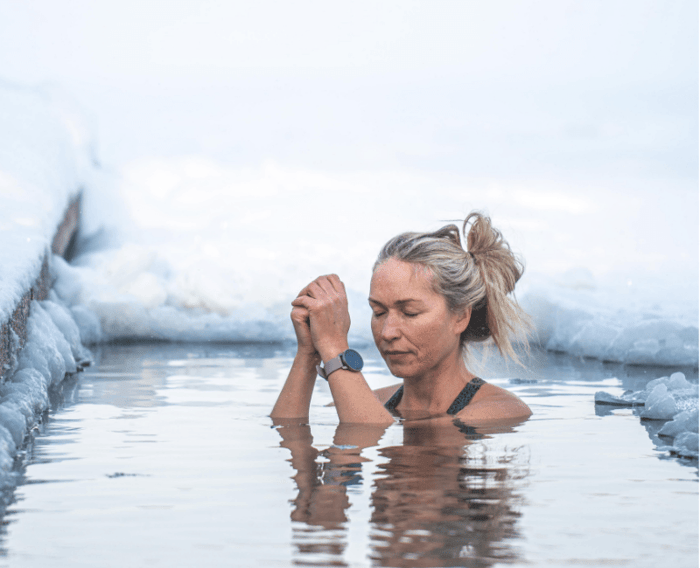
When you submerge your body in cold water, your brain isn’t thinking about your mortgage or your unread emails. It can’t. The "cold shock" response is a massive pattern interrupt. It’s a biological command that forces you into the absolute present moment.
The Dopamine Slow-Burn
Most of us chase dopamine spikes through social media "likes" or sugary snacks. These are cheap spikes followed by deep crashes. A cold plunge works differently. Research shows that cold immersion can trigger a sustained dopamine release of up to 250% above baseline. The magic here is the duration—this isn't a "high" that leaves you feeling jittery; it’s a steady, calm, and focused elevation that can last for 4 to 6 hours. For someone battling the "gray fog" of depression or the scattered energy of ADHD, this neurochemical clarity is a lifeline.
Training Your "Panic Switch"
This is the most human part of the process. In the water, your body screams, “Get out! You’re dying!” This is your sympathetic nervous system firing at 100%. By staying in the water, controlling your breath, and softening your gaze, you are practicing top-down regulation. You are teaching your prefrontal cortex (the rational brain) to stay in charge while the amygdala (the fear center) is panicking.
When you can master your breath in a 50°F tank, you are literally re-wiring your response to stress in the real world. The next time a client is difficult or a project fails, your nervous system remembers: “I’ve handled freezing water; I can handle this.”
Crushing the Friction
To be frank, most people bail on cold therapy not because of the cold, but because of the "hassle." If you have to haul 40 lbs of ice from the gas station every morning, or spend half an hour prepping a tub and checking temperatures, your brain will eventually talk you out of it.
Mental health is built on consistency, and that is exactly why I trust Plunge Chill. It wipes out all the "execution friction." When the water is crystal clear, filtered to 1-micron purity, and sitting at exactly the temperature you need, you lose your excuses. It transforms cold therapy from a stressful chore into a seamless sanctuary. You don't have to think, you don't have to prepare, and you don't have to worry about water quality; you just breathe and get in.
A Clinical Guide to Your First Cold Plunge
If you’re ready to move from theory to practice, here is a no-BS framework for integrating the cold plunge into your mental wellness routine:
The "Cold Finish" (Days 1–7) Don't jump into a frozen lake on day one. For the first week, take your normal warm shower and turn the knob to cold for the final 30 to 60 seconds. Focus on one thing: the exhale. If you can control your breath while the water hits your neck, you’ve already won.
The "Goldilocks Zone" (The 11-Minute Rule) Studies suggest that a cumulative total of 11 minutes of cold immersion per week—spread across 3 or 4 sessions—is the sweet spot for metabolic and mental benefits. Anything more is usually just for bragging rights.
The 3-Minute Reset Once you have a dedicated water chiller for ice bath, aim for 3 minutes per session at 50°F to 55°F. This is long enough to trigger the parasympathetic "rebound" effect (the deep calm that hits you once you exit) but short enough that it doesn't become a dangerous endurance test.
Safety, Ethics, and Common Sense
As with any powerful somatic intervention, cold plunging isn't for everyone. If you have a history of heart disease or extreme hypertension, you must clear this with a doctor. The goal here is regulation, not trauma.
If you find yourself shivering uncontrollably to the point where you can't speak, or if you start to feel "dissociated" or zoned out, your dose is too high. Cold therapy should feel like a challenge you can meet, not a battle you are losing.
Conclusion: Cooling the Inflamed Mind
We live in an "inflamed" society. Our bodies are physically inflamed by poor diet, and our minds are mentally inflamed by constant digital stimulation and chronic anxiety.
The cold plunge offers a radical alternative. It is a return to the physical. It forces us out of the labyrinth of our thoughts and back into the reality of our skin and bones. It teaches us that we are stronger than our discomfort and that peace is often found just on the other side of a few minutes of cold.