Table of Contents
- Understanding Dual Diagnosis and Why It Complicates Treatment
- How Equine Therapy Works in a Clinical Setting
- Core Benefits of Equine Therapy for Dual Diagnosis
- Addressing Trauma Through Somatic Experience
- Does Equine Therapy Actually Reduce Substance Use and Mental Health Symptoms?
- Who Is a Good Candidate for Equine Therapy in Dual Diagnosis Treatment?
- Equine Therapy in Residential and Outpatient Settings
- The Therapeutic Relationship Between Horse and Client
- Equine Therapy as Part of a Holistic Dual Diagnosis Approach
- Practical Considerations When Evaluating Equine Therapy Programs
- What Recovery Can Look Like When the Whole Self Is Involved
When someone is navigating both a substance use disorder and a co-occurring mental health condition, the path to recovery is rarely straightforward. Traditional talk therapy and medication management are foundational, but for many people, healing goes deeper when the body, nervous system, and sense of self are all invited into the process. That is exactly where equine-assisted therapy enters the picture.
In this article, Therapy Trainings explores the dynamics of Equine therapy, also called equine-assisted psychotherapy (EAP) or equine-assisted learning (EAL), and how it uses structured, facilitated interactions with horses as a therapeutic tool.
For individuals with dual diagnosis disorder, meaning a simultaneously occurring mental health disorder and substance use disorder, this approach offers a distinctive set of benefits that more conventional modalities sometimes cannot replicate.
Understanding Dual Diagnosis and Why It Complicates Treatment
Dual diagnosis, sometimes called co-occurring disorder, refers to the presence of at least one mental health condition alongside a substance use disorder. Common pairings include depression and alcohol use disorder, anxiety and opioid dependence, PTSD and stimulant misuse, or bipolar disorder alongside cannabis or alcohol misuse. These conditions do not simply coexist; they interact, reinforce, and often mask one another.
The complexity of treating dual diagnosis lies in the bidirectional relationship between mental illness and substance misuse. A person may have turned to substances to self-medicate symptoms of untreated depression or trauma.
Over time, substance use can worsen those very conditions, creating a cycle that is difficult to interrupt through a single treatment lens. Effective care requires integrated treatment, meaning both conditions are addressed concurrently rather than sequentially.
This is the clinical landscape that makes equine therapy particularly relevant. Because it works on emotional regulation, trust, self-awareness, and somatic processing simultaneously, it addresses several layers of dual diagnosis at once.
How Equine Therapy Works in a Clinical Setting
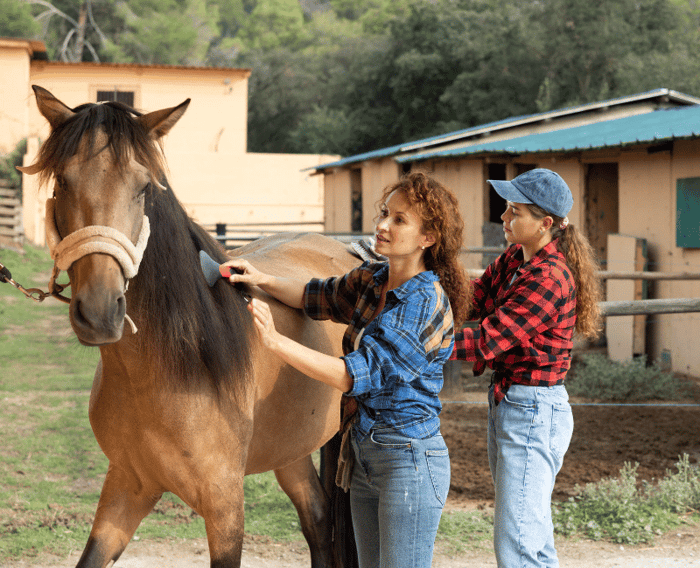
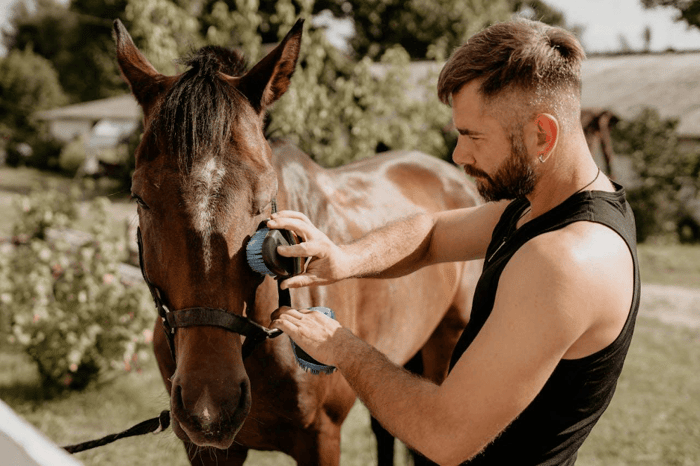
Equine-assisted therapy does not require riding a horse. Most evidence-based equine programs involve ground-level interaction: grooming, leading, observing, and completing guided tasks with horses under the supervision of a licensed mental health professional and a certified equine specialist. Sessions are structured around therapeutic goals and debriefed afterward to integrate insights.
Horses are uniquely suited to this work for several reasons. They are prey animals with a finely calibrated nervous system, making them highly sensitive to nonverbal cues, emotional states, and incongruence between what a person feels and what they project outwardly. Because horses respond in real time and without judgment, they become a kind of living biofeedback system, offering immediate, honest, and nonverbal responses to a client's emotional state.
What a Typical Session Involves
A session might begin with simple observation, asking the client to watch a herd of horses and notice which animal they are drawn to and why. Later, a client might be asked to lead a horse through a course using only body language, no verbal commands.
These activities seem simple on the surface, but they tend to surface patterns that mirror the client's relational and emotional habits: difficulty with trust, a need for control, avoidance of conflict, or challenges with communication. The therapeutic value lies in the processing that follows.
Core Benefits of Equine Therapy for Dual Diagnosis
The benefits of equine therapy for dual diagnosis are well-documented in clinical literature and increasingly supported by research. Below is a closer look at the mechanisms and outcomes that make this modality valuable in integrated treatment.
Emotional Regulation and Nervous System Repair
Many people with dual diagnosis carry significant dysregulation in their autonomic nervous system, a legacy of trauma, chronic stress, or prolonged substance use. Equine therapy has been shown to activate the parasympathetic nervous system, the branch responsible for rest, safety, and social engagement. Spending time with horses, particularly during grooming or quiet co-presence, has measurable effects on cortisol levels and heart rate variability.
For someone managing anxiety, PTSD, or mood instability alongside a substance use disorder, learning to access a regulated state, rather than seeking it through substances, is foundational to long-term recovery. Equine therapy offers a practiced, embodied path to that regulation.
Building Self-Awareness and Accountability
One of the hallmarks of dual diagnosis is a disrupted relationship with self-awareness. Substance use can dull insight, and mental health conditions often distort how a person perceives their own behavior and its impact on others. Horses have no investment in flattering a person or telling them what they want to hear. If a client approaches a horse with agitation, the horse moves away. If they approach with calm focus, the horse tends to mirror that ease.
This dynamic creates a uniquely honest feedback loop. Clients often find it easier to receive honest feedback from a horse than from a therapist, peer, or family member, because there is no social complexity, no perceived judgment, and no relationship history to navigate. Over time, this builds a more accurate and compassionate self-perception, a quality that directly supports recovery.
Rebuilding Trust and Attachment Capacity
Attachment disruptions, whether from early childhood trauma, relational abuse, or the fractures that addiction creates in close relationships, are common in people with dual diagnosis. Traditional therapy asks clients to build trust with a human therapist, which can feel threatening, especially for individuals with trauma histories.
Horses provide an intermediate step. They are large enough to command respect, present enough to require genuine engagement, and sufficiently nonthreatening to feel safer than a human relationship. Successfully building rapport with a horse, earning its trust through consistent, regulated behavior, can restore a person's belief in their capacity to form healthy connections. That belief becomes transferable to human relationships over time.
Addressing Trauma Through Somatic Experience
Trauma is stored not just in memory but in the body. Approaches that work purely through language and cognition often struggle to fully reach the body-based components of trauma. Equine therapy is inherently somatic: clients notice their posture, breath, muscle tension, and physical presence in relationship to a large, living animal. The therapy naturally invites a kind of body literacy that supports trauma processing.
For individuals treating SUDs alongside mental health disorders, many of whom carry histories of complex trauma, this somatic dimension is not a luxury. It is often the missing piece. When a person learns to be present in their body, to recognize and tolerate physical sensations without fleeing into substance use or dissociation, they are developing one of the most important skills in sustained recovery.
Does Equine Therapy Actually Reduce Substance Use and Mental Health Symptoms?
A reasonable question for anyone evaluating treatment options is whether equine therapy produces measurable outcomes beyond the anecdotal. The research base, while still growing, is encouraging. Studies have found that equine-assisted interventions are associated with reductions in depression, anxiety, and PTSD symptoms, as well as improvements in self-efficacy, emotional regulation, and social functioning.
Several studies focused on adolescent and adult populations with substance use histories have shown positive outcomes when equine therapy is integrated into a broader treatment plan.
It is important to note that equine therapy is most effective as a complementary modality within a comprehensive, evidence-based program rather than as a standalone intervention. When paired with cognitive-behavioral therapy, medication-assisted treatment when appropriate, group therapy, and case management, it adds a dimension of experiential learning that more structured modalities may not fully provide.
Who Is a Good Candidate for Equine Therapy in Dual Diagnosis Treatment?
Equine therapy is not the right fit for every person, and responsible programs conduct careful clinical screenings before placing clients in equine sessions. Generally, individuals who may benefit most are those who have difficulty accessing or articulating emotions verbally, those with trauma histories who find traditional talk therapy activating or dissociating, people who struggle with trust and relational engagement, and those who are treatment-resistant or who have found conventional approaches insufficient.
Individuals with certain animal phobias or physical limitations may not be appropriate candidates, and some acute psychiatric presentations require stabilization before experiential work can be safely introduced. A thorough clinical assessment is always the starting point.
Equine Therapy in Residential and Outpatient Settings
The integration of equine therapy into residential treatment programs has grown considerably over the past two decades. Programs that incorporate equine-assisted modalities tend to be located in rural or semi-rural settings where space and access to horses are available. This setting itself, quieter, slower, and closer to nature, often supports the therapeutic goals of equine work.
A holistic drug rehab in Georgia demonstrates how this modality can be woven into a full continuum of care. When clients have access to equine sessions throughout their residential stay, the work compounds over time, building on insights from previous sessions and deepening alongside progress in other therapeutic tracks.
Some outpatient and partial hospitalization programs also incorporate scheduled equine sessions, though the frequency is typically lower than in residential settings. Research suggests that even brief, structured equine programs can produce meaningful shifts in emotional regulation and therapeutic engagement.
The Therapeutic Relationship Between Horse and Client
It would be a mistake to treat the horse as simply a prop in the therapeutic process. The relational dimension between client and animal is the mechanism through which change occurs. Horses, as herd animals, are social by nature and capable of nuanced relational exchange. Clients frequently describe their relationship with a specific horse over the course of treatment as genuinely meaningful, and that meaning is clinically significant.
The therapeutic frame matters here as well. A licensed mental health professional is present during all equine sessions in evidence-based programs, observing, naming, and facilitating the therapeutic process in real time. The equine specialist manages the horse's welfare and physical safety. This dual-professional model ensures the work is clinically grounded, not simply recreational.
Equine Therapy as Part of a Holistic Dual Diagnosis Approach
The most effective dual diagnosis treatment programs recognize that recovery involves the whole person: mind, body, relationships, and sense of purpose. No single modality addresses all of these dimensions. Equine therapy fits within a broader holistic framework that might also include yoga, mindfulness, expressive arts therapies, nutrition counseling, and spiritual exploration alongside more conventional psychiatric and addiction medicine.
What makes equine therapy particularly complementary is that it tends to surface material that clients then bring into their individual and group therapy sessions. A client who notices avoidance behavior with a horse might be willing to explore that pattern with their therapist in a way they were not before. The experiential nature of equine work creates entry points for deeper verbal processing.
Practical Considerations When Evaluating Equine Therapy Programs
Not all equine programs are created equal. For anyone researching treatment options, several factors distinguish rigorous equine therapy from less clinically grounded offerings.
First, the program should employ credentialed mental health professionals who are present and active in every session, not simply on call. Second, the equine specialists should hold recognized credentials, such as those from the Equine Assisted Growth and Learning Association (EAGALA) or the Professional Association of Therapeutic Horsemanship International (PATH Intl.).
Third, the equine program should be integrated into a treatment plan with clear therapeutic goals rather than functioning as an isolated enrichment activity. Finally, the welfare standards for the horses themselves should be transparent and prioritized. Programs that care well for their horses tend to maintain the relational quality that makes this modality work.
What Recovery Can Look Like When the Whole Self Is Involved
For people who have spent years managing internal pain through substance use, the idea of feeling regulated, connected, and capable can feel distant. Equine therapy has a way of making those qualities tangible and immediate.
A client who spends thirty minutes in genuine connection with a horse, navigating trust, reading nonverbal cues, and staying present in their body, has not simply completed a therapy session. They have practiced being the person they are working to become.
Programs focused on treating SUDs alongside mental health disorders understand that lasting recovery depends on more than symptom reduction. It requires the development of new skills, new relational patterns, and a renewed sense of self-efficacy.
Equine therapy, when delivered with clinical rigor and genuine care, contributes to all three.
The horses, it turns out, are extraordinarily good teachers.