Table of Contents
- The Difference Between 12-Step Programs and 12-Step Facilitation Therapy
- What the Research Says About TSF
- How TSF Has Held Up Over Time
- Who Tends to Benefit Most from TSF
- What a TSF Session Actually Looks Like
- How TSF Fits into a Broader Treatment Plan
- Common Questions People Have About 12-Step Facilitation
- What to Look for in a Treatment Program That Offers TSF
- Selecting TSF and Evidence-Based Treatment

If you or someone you love is exploring addiction treatment options, you have probably come across 12-step programs. Maybe you have wondered whether they actually work, or whether they hold up to scientific scrutiny. It is a fair and important question.
The short answer is yes: 12-step facilitation therapy is considered evidence-based. But the fuller answer involves some nuance worth understanding, especially if you are making treatment decisions.
What "Evidence-Based" Actually Means in Addiction Treatment
Before diving into the research on 12-step facilitation specifically, it helps to understand what "evidence-based" means in a clinical context.
In this article, Therapy Trainings reviews how a treatment is considered evidence-based when it has been studied in controlled research settings, has shown measurable outcomes, and has been reviewed by the scientific community. It does not mean a treatment works for every single person, or that it is the only valid option. It means there is a credible body of research supporting its use.
The Difference Between 12-Step Programs and 12-Step Facilitation Therapy
Many people use these two terms interchangeably, but they describe different things. Alcoholics Anonymous and Narcotics Anonymous are peer support communities based on a 12-step model. They are not clinical treatments. 12-step facilitation therapy, often abbreviated as TSF, is a structured, professionally delivered clinical intervention. It was developed to help patients engage with 12-step programs as part of a formal treatment plan. That distinction matters a great deal when evaluating evidence.
What the Research Says About TSF
The most significant body of evidence for 12-step facilitation therapy comes from Project MATCH, one of the largest clinical trials ever conducted on alcohol use disorder treatments. Funded by the National Institute on Alcohol Abuse and Alcoholism, Project MATCH compared TSF head-to-head with Cognitive Behavioral Therapy and Motivational Enhancement Therapy. TSF performed as well as, and in some subgroups better than, the other two approaches in achieving abstinence at follow-up. That was not a minor finding. It helped establish TSF as a legitimate, research-supported clinical intervention.
How TSF Has Held Up Over Time
Since Project MATCH, additional studies have continued to support TSF as an effective approach. A Cochrane Review examining Alcoholics Anonymous and TSF found that TSF likely produces higher rates of continuous abstinence compared to other active treatments at both 12-month and longer follow-up periods. The Cochrane Collaboration is one of the most respected bodies for evaluating medical and behavioral health research, so this review carries significant weight.
It is worth noting that abstinence is not the only meaningful outcome in addiction treatment. Quality of life, reduced hospitalizations, improved relationships, and sustained engagement in recovery all matter. Research has shown TSF to have positive effects across several of these dimensions, not just sobriety rates.
Who Tends to Benefit Most from TSF
Evidence-based does not mean one-size-fits-all, and TSF is no exception. Research suggests that individuals who are socially isolated or lack a strong support network often respond especially well to 12-step facilitation. The built-in community aspect of 12-step programs addresses something that medication or individual therapy alone cannot fully provide: human connection and accountability.
People with more severe alcohol dependence, those who have experienced multiple relapses, and individuals who find meaning through spiritual or communal frameworks also tend to show strong outcomes with TSF. This does not mean people without these characteristics will not benefit. It means treatment providers can use this information to match individuals to the interventions most likely to work for them.
What a TSF Session Actually Looks Like
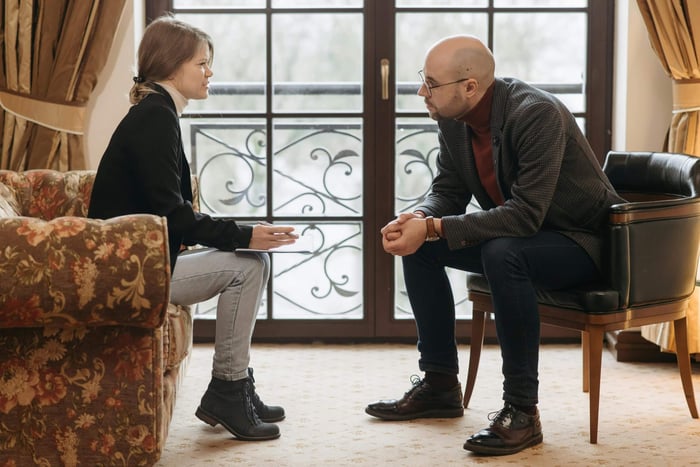
It can be helpful to understand what TSF looks like in practice. Unlike simply attending an AA meeting, TSF is delivered by a trained clinician over a defined number of sessions, typically 12 to 15. Sessions focus on three core ideas: acceptance of addiction as a disease, willingness to seek help through a higher power or community, and active involvement in 12-step meetings.
Therapists using TSF work through structured content with patients, address barriers to meeting attendance, and help patients understand and internalize the principles of the 12-step model. The goal is not just meeting attendance for its own sake, but genuine engagement with the recovery community and the behavioral shifts that tend to follow.
How TSF Fits into a Broader Treatment Plan
One of the strengths of TSF is that it is designed to complement other interventions rather than replace them. It can be delivered alongside medication-assisted treatment, individual psychotherapy, trauma-focused care, and family therapy. In integrated treatment settings offering 12-step therapy approaches alongside evidence-based modalities like CBT and EMDR, patients often have access to a more comprehensive recovery experience.
TSF is particularly well-suited to residential and intensive outpatient programs where structured programming and community building are central. It creates a bridge between formal clinical care and the longer-term peer support network a person will lean on after discharge, which is one of the most common gaps in addiction treatment.
Common Questions People Have About 12-Step Facilitation
Does someone have to be religious to benefit from TSF?
This is probably the most frequently raised concern about 12-step approaches. The original 12-step model does include spiritual language, and some individuals are uncomfortable with that. Many treatment providers address this directly by emphasizing the "higher power" concept as a personal or philosophical framework rather than a religious one. There are also secular 12-step alternatives that retain the community and accountability structure without the spiritual language. TSF can be adapted to account for a patient's beliefs and comfort level.
Is TSF appropriate for drug addiction, or only alcohol use disorder?
Most of the landmark research on TSF focused on alcohol use disorder, but the principles and framework have been extended to other substance use disorders. Programs like Narcotics Anonymous follow a parallel 12-step model, and TSF can be delivered in drug treatment contexts as well. The evidence base for TSF in non-alcohol substance use disorders is less extensive but growing.
Can TSF work alongside medication-assisted treatment?
Yes. Medications like buprenorphine, naltrexone, and methadone are among the most effective tools available for opioid use disorder and alcohol use disorder. There was historically some tension between 12-step communities and medication-assisted treatment, with some members discouraging medication use. However, this is shifting, and well-designed treatment programs help patients navigate this so they can benefit from both evidence-based approaches simultaneously.
What to Look for in a Treatment Program That Offers TSF
If you are evaluating programs that incorporate 12-step facilitation, there are a few things worth asking about. Is the TSF delivered by a trained clinician, or is it simply meeting attendance? Is it integrated with other evidence-based treatments or offered in isolation? Does the program help patients work through barriers to engagement, including skepticism about the 12-step model?
An accredited treatment center in the greater Phoenix area approaches TSF as one component of an individualized treatment plan, not a standalone solution. That framing reflects how the research actually supports TSF as an effective intervention within a broader therapeutic context.
Selecting TSF and Evidence-Based Treatment
The evidence supporting 12-step facilitation therapy is not anecdotal, and it is not thin. It includes large-scale clinical trials, systematic reviews, and decades of follow-up research. TSF has earned its place in clinical guidelines and is recognized by SAMHSA, the National Institute on Drug Abuse, and other major behavioral health authorities as an effective intervention.
That said, the best treatment is the one that fits the individual. TSF works well for many people, particularly when it is delivered skillfully and embedded within a comprehensive program. It is not a moral framework dressed up as therapy. It is a structured, studied, and clinically supported approach to helping people build lasting recovery.
If you are weighing your options, knowing that TSF stands on solid scientific ground is a reasonable starting point for the conversation with a treatment professional.