Table of Contents
- Understanding Erikson's Theory
- The Eight Stages of Psychosocial Development
- 1. Trust vs. Mistrust (0-18 months)
- 2. Autonomy vs. Shame and Doubt (18 months - 3 years)
- 3. Initiative vs. Guilt (3-5 years)
- 4. Industry vs. Inferiority (5-12 years)
- 5. Identity vs. Role Confusion (12-18 years)
- 6. Intimacy vs. Isolation (18-40 years)
- 7. Generativity vs. Stagnation (40-65 years)
- 8. Ego Integrity vs. Despair (65+ years)
- Applying Erikson's Theory in Therapy
- Integrating Erikson's Theory with Other Therapeutic Approaches
- Enhancing Your Therapeutic Skills with Continued Education
- Conclusion
- References
Erik Erikson's theory of psychosocial development provides a comprehensive framework for understanding human growth and development across the lifespan. As mental health professionals, integrating this perspective into our therapeutic approach can enhance our ability to support clients at various life stages. This article explores Erikson's eight stages of development, their relevance to therapy, and practical applications for clinicians working with diverse age groups.
Understanding Erikson's Theory
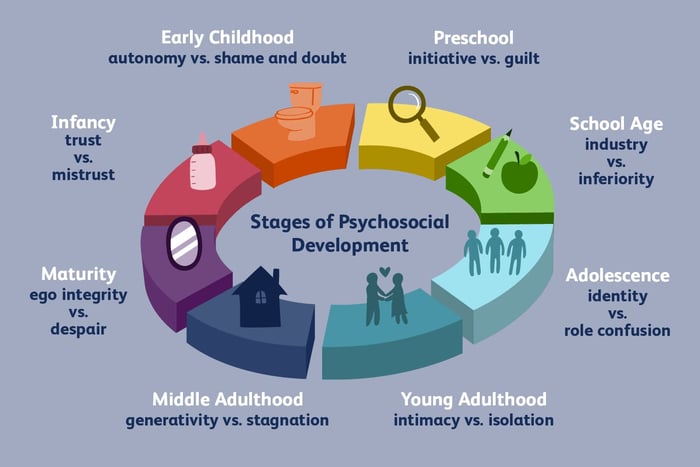
Erik Erikson, a renowned psychoanalyst and developmental psychologist, expanded on Freud's psychosexual theory to create a more comprehensive model of human development. Erikson's theory emphasizes the role of social interactions and relationships in shaping personality and behavior throughout life. Each stage presents a unique psychosocial crisis that individuals must navigate to achieve healthy development [1].
The Eight Stages of Psychosocial Development
1. Trust vs. Mistrust (0-18 months)
Key Challenge: Developing a sense of trust in caregivers and the world
Therapeutic Implications:
- Addressing attachment issues in early childhood
- Supporting new parents in creating secure bonds with their infants
Case Study: Sarah, a first-time mother, sought therapy due to postpartum depression. By focusing on enhancing her bond with her 3-month-old daughter, the therapist helped Sarah develop more confidence in her parenting abilities, ultimately fostering a sense of trust between mother and child.
2. Autonomy vs. Shame and Doubt (18 months - 3 years)
Key Challenge: Developing a sense of personal control and independence
Therapeutic Implications:
- Encouraging age-appropriate independence in young children
- Addressing issues of control and self-doubt in adult clients
3. Initiative vs. Guilt (3-5 years)
Key Challenge: Developing a sense of purpose and ability to lead
Therapeutic Implications:
- Supporting children's creativity and exploration
- Helping adults reconnect with their sense of initiative and purpose
4. Industry vs. Inferiority (5-12 years)
Key Challenge: Developing a sense of competence and mastery
Therapeutic Implications:
- Building self-esteem and confidence in school-age children
- Addressing feelings of inadequacy or impostor syndrome in adults
5. Identity vs. Role Confusion (12-18 years)
Key Challenge: Developing a coherent sense of self and personal identity
Therapeutic Implications:
- Supporting adolescents in exploring their values, beliefs, and goals
- Helping adults who struggle with identity issues or major life transitions
Case Study: Alex, a 16-year-old client, was struggling with anxiety and depression related to questions about their gender identity. The therapist used Erikson's framework to normalize Alex's identity exploration and helped them develop coping strategies for managing societal pressures.
6. Intimacy vs. Isolation (18-40 years)
Key Challenge: Forming close, committed relationships with others
Therapeutic Implications:
- Addressing relationship issues and attachment patterns
- Supporting clients in developing emotional intimacy skills
7. Generativity vs. Stagnation (40-65 years)
Key Challenge: Contributing to society and future generations
Therapeutic Implications:
- Helping clients find meaning and purpose in midlife
- Addressing career dissatisfaction or existential concerns
8. Ego Integrity vs. Despair (65+ years)
Key Challenge: Reflecting on life with a sense of fulfillment and acceptance
Therapeutic Implications:
- Supporting older adults in life review and meaning-making
- Addressing end-of-life concerns and fostering resilience
Applying Erikson's Theory in Therapy
Understanding Erikson's stages can enhance therapeutic practice in several ways:
- Developmental Context: Erikson's theory provides a framework for understanding clients' current challenges in the context of their developmental stage.
- Identifying Unresolved Conflicts: Therapists can use the model to identify unresolved conflicts from earlier stages that may be impacting current functioning.
- Strength-Based Approach: The theory emphasizes the potential for growth and mastery at each stage, aligning with strength-based therapeutic approaches.
- Life Transitions: Erikson's model is particularly useful when working with clients navigating major life transitions or developmental milestones.
- Intergenerational Perspective: The theory can inform work with families, highlighting how unresolved issues may be passed down through generations.
Integrating Erikson's Theory with Other Therapeutic Approaches
Erikson's psychosocial theory can be effectively integrated with various therapeutic modalities:
- Cognitive-Behavioral Therapy (CBT): Use Erikson's stages to identify core beliefs and cognitive distortions related to developmental challenges.
- Psychodynamic Therapy: Explore how early developmental experiences shape current relational patterns and defense mechanisms.
- Family Systems Therapy: Consider how family dynamics influence the resolution of psychosocial crises across generations.
- Narrative Therapy: Help clients reframe their life stories through the lens of Erikson's developmental tasks and achievements.
Enhancing Your Therapeutic Skills with Continued Education
As mental health professionals, staying updated with the latest research and therapeutic techniques is crucial for providing the best care to our clients. Therapy Trainings™ offers a wide range of continuing education courses that can help you deepen your understanding of developmental theories like Erikson's and their practical applications in therapy.
Visit therapytrainings.com to explore our comprehensive catalog of CE courses, approved by licensing boards across the nation. Whether you're interested in child development, adult therapy, or geriatric mental health, you'll find courses that can enhance your practice and help you better serve clients at every stage of life.
Conclusion
Erik Erikson's stages of psychosocial development provide a valuable framework for understanding human growth and development across the lifespan. By integrating this perspective into our therapeutic work, we can offer more nuanced and developmentally appropriate interventions for clients of all ages. As you continue to evolve in your practice, remember that ongoing education is key to providing the highest quality care.
Erikson's Stages of Psychosocial Development provides a framework for understanding the emotional and social challenges clients face at different stages of life, and to complement this, reading our blog Thought Process Examples in Therapy can offer valuable insights into the cognitive patterns that shape clients' responses to these developmental challenges, enabling more targeted and effective interventions. Moreover, exploring Kohlberg's Stages of Moral Development can provide deeper insights into the development of clients' moral reasoning, allowing you to address both psychosocial growth and ethical decision-making in your interventions. Lastly, you might want to read Reliability vs. Validity in Psychological Assessment: A Comprehensive Guide for Mental Health Professionals, which can help ensure that you use accurate and dependable tools when evaluating where clients stand in their psychosocial development, leading to more effective and informed interventions.
Take the next step in your professional development by exploring the diverse range of CE courses offered at therapytrainings.com. Invest in your skills today to better support your clients tomorrow.
References
- Erikson, E. H. (1950). Childhood and society. W. W. Norton & Company.
- McLeod, S. (2018). Erik Erikson's Stages of Psychosocial Development. Simply Psychology. https://www.simplypsychology.org/Erik-Erikson.html
- American Psychological Association. (2020). Erikson's Theory of Psychosocial Development. In the APA Dictionary of Psychology. https://dictionary.apa.org/eriksons-theory-of-psychosocial-development