Table of Contents
- Integrated Care That Optimizes Treatment
- Telehealth Skills That Expand Collaboration
- Communication That Keeps Everyone Aligned
- Leadership and Consultation That Support Career Growth
- Career Mobility Within Collaborative Care Systems
- Access, Continuity, and Ethical Team Care
- Preparing for the Realities of Modern Mental Health Care
- Building Collaborative Impact With Purpose
Collaborative mental health care succeeds when every clinician shares the same goals, the same information, and is in sync as regards the next steps.
Teams are now faced with increasing complexity, including higher acuity, tighter timelines, and more transitions between primary care, specialty care, and community support.
When coordination slips, patients experience delays, mixed messages, and avoidable risk.
Online PMHNP education strengthens how collaborative teams function. It builds capability in integrated care models, telehealth and technology, advanced communication, leadership and consultation, and culturally competent, ethical practice.
Integrated Care That Optimizes Treatment
Mental and physical health often live in separate siloed workflows, and the gaps show up quickly in day-to-day care. Online PMHNP preparation emphasizes integrated care models, so treatment planning connects behavioral and psychological health with medical priorities. This matters in primary care, emergency settings, and specialty clinics where symptoms overlap and time is limited.
Consider a patient who reports panic symptoms, insomnia, chronic pain, and uncontrolled diabetes. If each discipline treats only a single symptom, the patient is treated according to competing priorities, and the result may also include inconsistent follow-up.
Integrated training helps professionals align the team around a single person-centered plan. Symptom targets, therapy goals, lifestyle support, and medication monitoring remain connected and measurable.
This approach also reduces duplicate work. When assessment findings translate into clear next steps and transparent shared responsibilities, the team spends less time re-assessing and more time delivering coordinated care. Patients notice the difference when every visit reinforces the same plan and is based on the same rationale.
Telehealth Skills That Expand Collaboration
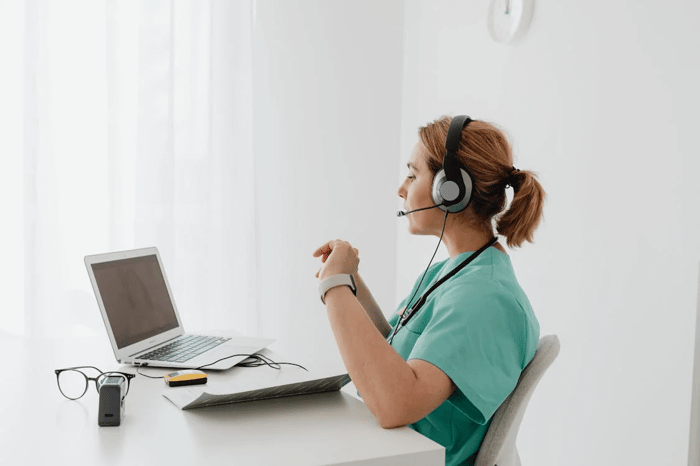
Telehealth now shapes how teams collaborate across locations, and online PMHNP programs build that capability directly. Training commonly includes increasing familiarity with telehealth platforms, virtual simulations, and AI-enhanced tools for monitoring and documentation.
These skills make remote consultation smoother and keep treatment moving when in-person access is limited.
In underserved or rural communities, the impact is immediate. Structured check-ins support timely follow-ups and safer medication monitoring without long travel or extended wait times. Primary care clinics also consult faster when psychiatric support is available virtually, which helps reduce avoidable escalation.
Technology strengthens continuity when documentation stays clear and actionable. Symptom tracking, risk updates, and plan changes remain accessible, so therapists, care managers, and medical staff reinforce the same plan instead of rebuilding it.
Communication That Keeps Everyone Aligned
Collaboration improves when communication stays consistent across roles and across settings. PMHNP curricula emphasize active listening, social perceptiveness, and clear interpersonal communication. These skills help keep team conversations practical and focused on action.
In case discussions, concise summaries and defined next steps prevent confusion. It also helps when roles remain explicit and transparent. The therapist drives psychotherapy goals, care management addresses integration, and clinical staff monitor safety and follow up. With role clarity, the team avoids duplication of effort, and patients avoid mixed messages.
Communication strengthens engagement, not just workflow. Patients follow through more often when options are explained in plain language, and decisions feel shared.
Both patients and families benefit when expectations stay clear, and support plans feel realistic. Clear, respectful explanations and consistent check-ins usually carry more weight than complex language.
Leadership and Consultation That Support Career Growth
Career-aligned leadership. As responsibilities expand, leadership becomes less about authority and more about improving systems.
PMHNP preparation builds leadership and consultation abilities, so evidence-based recommendations fit real workflows. Choosing an online PMHNP program supports that growth by strengthening integrated care thinking, communication discipline, and consultative presence. Online coursework means that professional responsibilities can continue to be met without disruption.
The focus on consultation is vital, as coordination often prevents delays. When depression scores rise or safety concerns increase, the team needs a clear next step. Monitoring frequency, escalation thresholds, and referral timing become easier to standardize, which improves safety and reduces uncertainty for the whole team.
Leadership also shows up through repeatable processes such as structured case reviews and shared outcome tracking. When teams rely on consistent frameworks, collaboration becomes dependable, scalable, and easier to sustain.
Career Mobility Within Collaborative Care Systems
Collaborative care environments increasingly value clinicians who can move across settings while maintaining consistency in practice.
PMHNP preparation supports this flexibility by grounding clinical decisions in shared standards rather than site-specific habits. As a result, professional mobility increases without sacrificing quality or team alignment.
In hospital systems, this preparation supports smoother collaboration with inpatient teams, discharge planners, and outpatient providers. Treatment plans remain intact as patients transition between levels of care.
In outpatient and integrated clinics, collaboration becomes more efficient because expectations, documentation, and communication styles remain consistent.
Individual career advancement also benefits from this versatility. Teams rely on clinicians who can step into consultative roles, support program development, and mentor colleagues without disrupting workflow. PMHNP training supports that expectation by emphasizing leadership presence, in addition to clinical skill.
From an organizational perspective, clinicians who strengthen collaboration reduce operational friction. Fewer care gaps mean fewer emergency escalations, fewer missed follow-ups, and stronger patient retention.
Over time, this reliability positions collaborative clinicians for expanded responsibility, leadership opportunities, and long-term professional stability.
Access, Continuity, and Ethical Team Care
Online PMHNP programs help expand the workforce by preparing clinicians to practice in hospitals, outpatient clinics, private practice, and telehealth. That broader ecosystem supports access by reducing delays and strengthening coverage where shortages hit hardest.
Better access also supports smoother transitions, including movement from inpatient stabilization to outpatient follow-up.
Continuity matters as much as access. When care plans remain coordinated through clear documentation and shared goals, patients avoid repeated restarts and gaps in monitoring. The team can build progress instead of reconstructing history at every visit.
This is especially important for patients managing multiple diagnoses, medication changes, and social stressors.
Ethical and culturally competent care strengthens collaboration in diverse communities. Programs emphasize patient-centered practice that considers sociocultural factors affecting trust, access, and engagement.
When care respects the lived context, patients are more likely to stay connected. Teams also collaborate better when treatment recommendations account for real barriers, not textbook conditions.
Preparing for the Realities of Modern Mental Health Care
Mental health care now operates under constant pressure from rising demand, limited resources, and increasing clinical complexity.
PMHNP preparation helps you respond to these realities with structure rather than reactive, urgency-driven decision-making. Training emphasizes prioritization, risk awareness, and consistent follow-up, all of which strengthen team reliability.
In fast-paced settings, teams rely on clinicians who can maintain clarity during change or crisis. PMHNP education supports that steadiness by reinforcing evidence-based practice, ethical judgment, and collaborative problem solving.
This preparation helps teams adapt to new care models, evolving technology, and shifting patient needs without losing continuity or quality.
Building Collaborative Impact With Purpose
Collaborative mental health teams thrive when integrated care stays consistent, communication stays clear, and transitions are optimized.
Online PMHNP preparation strengthens those essentials through training in integrated models, telehealth and technology, advanced communication, leadership-oriented consultation, and culturally competent, ethical practice.
This pathway supports professional momentum while building skills that translate into better coordination and stronger continuity of care.
When the team shares one plan and consistently optimizes it, patients experience fewer gaps and more stable progress. Over time, that reliability becomes a defining strength for both clinical outcomes and career development.