Table of Contents
- What Is an ESA Letter?
- The Legal Framework Behind Emotional Support Animals
- Why ESA Letters Are Often Misunderstood
- How a Legitimate ESA Evaluation Works
- The Role of Telehealth in ESA Evaluations
- What Makes an ESA Letter Legitimate?
- Introducing ESA Letter Online
- Why Platforms Like ESA Letter Online Are Emerging
- The Importance of Clinician Independence
- Who Typically Qualifies for an ESA Letter?
- What an ESA Letter Does — and Does Not Do
- Choosing a Trustworthy ESA Letter Provider
- The Future of ESA Evaluations
- Final Thoughts
- FAQs
ESA Letter: How to Get a Legitimate Emotional Support Animal Letter from a Licensed Mental Health Professional
Emotional support animals have become an important form of mental health support for many people living with anxiety, depression, PTSD, and other psychological conditions. But one of the most common questions people ask is simple: How do you get a legitimate ESA letter?
An ESA letter — also called an emotional support animal letter — is the official documentation written by a licensed mental health professional stating that a person has a mental or emotional condition and that the presence of an emotional support animal helps alleviate symptoms associated with that condition.
In recent years, demand for ESA documentation has increased significantly. Unfortunately, the internet is filled with misleading services that promise instant approvals, automated letters, or “guaranteed ESA certification.” These services often create confusion about what is legally valid and what is not.
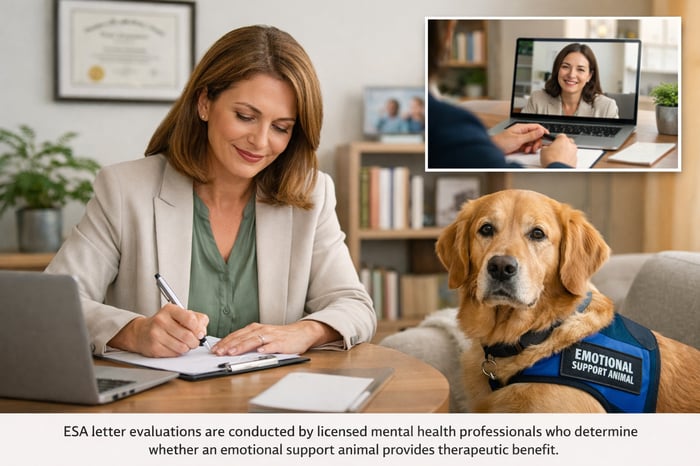
In reality, obtaining a valid ESA letter requires a clinical evaluation conducted by a licensed mental health professional who is authorized to assess mental health conditions and determine whether an emotional support animal is appropriate.
This article explains how ESA letters work, who can write them, the legal framework surrounding emotional support animals, and how individuals can obtain legitimate documentation through professional platforms such as ESA Letter Online.
What Is an ESA Letter?
An ESA letter is a formal document written by a licensed mental health professional stating that a person qualifies for an emotional support animal as part of their mental health care.
The letter typically confirms three key things:
- The individual has a mental or emotional condition recognized in clinical practice.
- The emotional support animal provides therapeutic benefit related to that condition.
- The clinician issuing the letter is licensed and qualified to make that determination.
Unlike service animals, emotional support animals do not require specialized training. Their therapeutic benefit comes from companionship, emotional regulation, and the calming effects that animals often provide.
However, ESA documentation must be written by a qualified professional such as:
• Licensed Professional Counselors (LPC or LPCC)
• Licensed Clinical Social Workers (LCSW)
• Licensed Marriage and Family Therapists (LMFT)
• Psychologists (PhD or PsyD)
• Psychiatrists or other licensed mental health providers
Because ESA letters are considered clinical documentation, they cannot legally be generated by automated systems or websites that simply sell “certificates.”
The Legal Framework Behind Emotional Support Animals
Understanding ESA letters requires understanding the laws that recognize emotional support animals.
The primary federal law governing emotional support animals is the Fair Housing Act (FHA). Under this law, individuals with qualifying disabilities may request reasonable accommodation from housing providers to live with an emotional support animal, even in housing that normally restricts pets.
In these situations, housing providers may request reliable documentation confirming the need for the emotional support animal.
That documentation typically comes in the form of an ESA letter written by a licensed clinician.
Importantly, the law does not require a specific template or registry. What matters is that the letter comes from a licensed professional who has conducted a legitimate evaluation.
Why ESA Letters Are Often Misunderstood
The popularity of emotional support animals has led to a flood of online services promising fast approvals and instant certificates. Many of these services operate more like marketing platforms than clinical services.
Common misleading claims include:
• “Register your pet as an ESA instantly”
• “Guaranteed ESA approval”
• “Official ESA certification database”
In reality, there is no official ESA registry recognized by federal law.
The only legally meaningful documentation is a letter from a licensed mental health professional who has evaluated the individual’s mental health needs.
Because of this confusion, individuals seeking ESA letters should prioritize platforms that work directly with licensed clinicians and follow proper telehealth and clinical evaluation standards.
How a Legitimate ESA Evaluation Works
A legitimate ESA evaluation involves a clinical review conducted by a licensed mental health professional.
While the process may vary slightly depending on the provider and the state where the client lives, most evaluations follow a structured process.
Step 1: Client Intake
The individual completes a questionnaire or intake form describing their mental health history, current symptoms, and how an emotional support animal helps them manage those symptoms.
Step 2: Clinical Review
A licensed clinician reviews the intake information to determine whether additional information is needed or whether a telehealth consultation should occur.
Step 3: Telehealth Consultation (When Appropriate)
In many cases, clinicians conduct a brief telehealth conversation to discuss the individual’s mental health concerns and assess whether the animal plays a meaningful therapeutic role.
Step 4: Clinical Determination
After reviewing the information, the clinician makes an independent clinical decision to approve, deny, or request additional documentation.
If approved, the clinician writes an ESA letter confirming the therapeutic need.
The Role of Telehealth in ESA Evaluations
Telehealth has become an important component of modern mental health care. Licensed clinicians regularly conduct therapy, evaluations, and consultations through secure video or telehealth platforms.
ESA evaluations often follow similar telehealth models.
Licensed mental health professionals may conduct remote evaluations when permitted by state licensing laws and telehealth regulations.
However, the clinician must always maintain professional judgment and adhere to ethical and legal standards within their licensing jurisdiction.
This is why platforms that connect individuals directly with licensed clinicians are generally more reliable than automated “ESA certificate” websites.
What Makes an ESA Letter Legitimate?
A legitimate ESA letter typically includes several key elements:
• The clinician’s name, license type, and license number
• The state where the clinician is licensed
• Confirmation that the clinician evaluated the individual
• A statement that the emotional support animal helps alleviate symptoms associated with the person’s condition
• The clinician’s signature and professional contact information
Housing providers may verify the clinician’s license if needed, which is why the letter must come from a licensed professional rather than a registry website.
Introducing ESA Letter Online
ESA Letter Online was created to address the growing demand for legitimate emotional support animal evaluations while maintaining professional clinical standards.
The platform connects individuals with licensed mental health professionals who conduct evaluations and make independent clinical determinations regarding ESA eligibility.
Unlike many automated ESA websites, the ESA Letter Online model is designed around clinicians rather than marketing promises.
Licensed therapists and psychologists on the platform review each request individually, ensuring that any ESA letter issued is supported by professional judgment and clinical documentation.
The platform currently includes a large network of licensed clinicians across the United States, enabling individuals in many states to access legitimate ESA evaluations through telehealth.
This model reflects the broader shift toward telehealth-based mental health services while preserving the role of licensed professionals in the evaluation process.
Why Platforms Like ESA Letter Online Are Emerging
Traditional mental health practices sometimes avoid writing ESA letters due to concerns about liability, documentation requirements, or practice policies.
As a result, many individuals seeking legitimate ESA evaluations struggle to obtain documentation through their existing therapists or primary care providers.
This gap has led to the emergence of clinician-driven platforms designed specifically for ESA evaluations.
By connecting individuals directly with licensed mental health professionals who understand ESA documentation standards, these platforms provide a more structured and transparent path for obtaining legitimate ESA letters.
At the same time, clinicians participating in these networks retain full independent clinical judgment regarding whether an ESA letter should be issued.
The Importance of Clinician Independence
A legitimate ESA letter should always be the result of independent clinical judgment.
No ethical platform should guarantee approval before a clinician reviews the case.
Responsible ESA platforms operate under a model where clinicians may:
• Approve the request
• Deny the request
• Request additional information
• Recommend other mental health resources
This approach protects both clients and clinicians while ensuring that ESA documentation remains consistent with professional standards.
Who Typically Qualifies for an ESA Letter?
Emotional support animals are commonly recommended for individuals experiencing conditions such as:
• Anxiety disorders
• Depression
• Post-traumatic stress disorder
• Panic disorder
• Social anxiety
• Certain trauma-related conditions
However, an ESA letter is not based solely on diagnosis.
The key clinical question is whether the presence of an animal meaningfully helps alleviate symptoms associated with the individual’s mental health condition.
Only a licensed mental health professional can make that determination.
What an ESA Letter Does — and Does Not Do
An ESA letter primarily provides documentation supporting a housing accommodation under the Fair Housing Act.
It may allow individuals to request reasonable accommodation from housing providers who otherwise restrict pets.
However, ESA letters do not grant all the privileges associated with service animals.
For example:
• Emotional support animals are not automatically allowed in restaurants or public spaces under the ADA
• Airlines are no longer required to accommodate emotional support animals as service animals
• ESA letters are primarily relevant to housing accommodations
Understanding these distinctions is important for both individuals and housing providers.
Choosing a Trustworthy ESA Letter Provider
If you are seeking an ESA letter online, it is important to choose a provider that emphasizes clinical integrity rather than marketing shortcuts.
Look for platforms that:
• Work directly with licensed mental health professionals
• Allow clinicians to make independent determinations
• Avoid “instant approval” guarantees
• Provide transparent information about the evaluation process
ESA Letter Online was designed with these principles in mind, focusing on connecting individuals with licensed clinicians rather than selling automated certifications.
The Future of ESA Evaluations
As telehealth continues to expand across the mental health field, platforms that connect individuals with licensed clinicians are likely to become more common.
Telehealth has already transformed access to therapy, psychiatric care, and psychological evaluations. ESA evaluations represent another area where licensed clinicians can responsibly use telehealth tools to reach individuals who may otherwise lack access to care.
At the same time, maintaining professional standards will remain critical. Ethical ESA evaluations must continue to prioritize clinical judgment, documentation, and compliance with state licensing laws.
Platforms built around clinician networks — rather than automated approvals — are more likely to maintain credibility and trust in this evolving space.
Final Thoughts
Obtaining a legitimate ESA letter should involve a thoughtful evaluation conducted by a licensed mental health professional.
While the internet is filled with websites promising instant ESA certifications, the only documentation that truly carries legal and clinical credibility is a letter written by a licensed clinician who has assessed the individual’s mental health needs.
For individuals seeking a structured and clinician-driven evaluation process, platforms like ESA Letter Online provide a modern telehealth approach to ESA documentation.
By connecting clients directly with licensed therapists and psychologists who review each request individually, these platforms help ensure that emotional support animal letters are issued responsibly, ethically, and in accordance with professional mental health standards.
As awareness of emotional support animals continues to grow, maintaining this balance between accessibility and clinical integrity will be essential for protecting both individuals and the mental health professionals who serve them.